
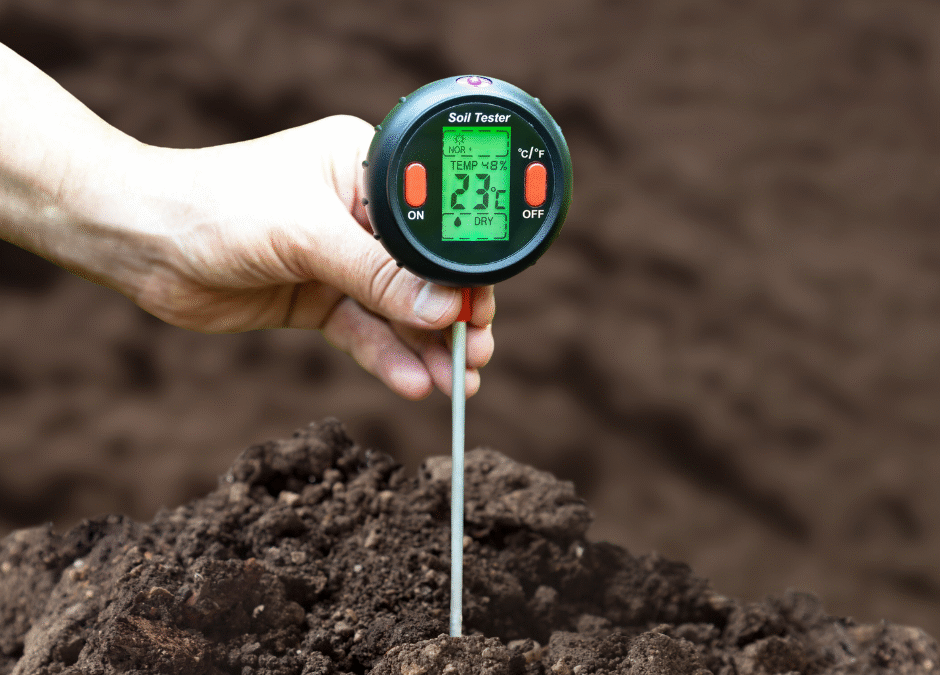
When you think about building a new home in Southwest Florida, elevation is usually top of mind. After all, flood zones and storm risk play a huge role in how and where homes are built. But if your lot isn’t connected to city utilities and requires a septic system instead, there’s another piece of the puzzle many people overlook until late in the process: the percolation, or “perc,” test.
A perc test doesn’t directly set the required elevation for your home, but it does play a key role in septic-dependent areas. The space and drainage needs of your septic design can influence the elevation, cost, and construction approach for your home.
What a Perc Test Is (and Why It Matters)
A perc test measures how quickly your soil absorbs water. To run the test, a soil professional digs small holes in the proposed drain field, fills them with water, and times how fast it drains. Results are measured in minutes per inch (MPI).
Why it matters:
- Septic systems rely on the soil’s ability to filter wastewater safely.
- If your soil drains too quickly, groundwater can be contaminated.
- If it drains too slowly, the system may back up or fail.
Simply put, no perc test, no septic system. And no septic system, no house. That’s why this test is required before a permit can be issued on lots without sewer service.
How Perc Results Connect to Elevation
Here’s where things tie back to building height:
- Gravity Flow Systems: If the soil drains well, you may be able to use a gravity system. These require your home to sit high enough above the septic tank and drain field for wastewater to flow naturally. In many cases, that means raising your home 3–5 feet above grade with fill dirt or a stem wall foundation.
- Pump Systems: If the soil conditions don’t allow gravity flow, a pump can move wastewater to the drain field. This option usually adds about $3,000 to the septic cost, but can save $10,000–$20,000 in fill dirt and foundation expenses, since the home doesn’t have to be elevated as much.
In other words, your perc results don’t tell you how high your house must sit, but they can influence whether you need extra fill, a stem wall, or mechanical pumping to make everything work.
Florida Regulations and Water Tables
Florida adds another wrinkle with vertical separation requirements:
- Drain fields must sit at least 24 inches above the seasonal high water table (and sometimes as little as 12 inches if engineered properly).
- On lots with shallow groundwater, this often means building mounded drain fields, which may in turn affect how your home’s elevation is designed.
Pair that with flood zone requirements (like Base Flood Elevation plus freeboard in Zone AE, or pilings in Zone VE), and it’s easy to see why elevation isn’t just about storms, it’s about wastewater too.
BMAP Rules in Southwest Florida
If your lot falls inside a Basin Management Action Plan (BMAP) area, septic requirements get even stricter. These rules are designed to protect our waterways from nitrogen pollution.
- Lots under 1 acre usually require advanced septic systems that treat nitrogen more effectively.
- Lots over 1 acre may still be able to use conventional systems.
- Existing systems don’t always need to be upgraded unless you’re replacing or expanding.
Advanced systems cost more but may be mandatory depending on where your land is located. This is another reason it’s critical to understand both the perc test results and the regulatory overlay on your lot.
Why Professional Guidance Matters
Every property is different. Your final elevation will depend on:
- FEMA flood zone designations and Base Flood Elevations
- Soil conditions and perc test results
- Seasonal high water tables
- Septic system design (gravity, pump, or advanced treatment)
- Local health and building department regulations
At Sposen Homes, we help our clients navigate these details early in the process so there are no surprises later. From coordinating perc testing to designing the right foundation and septic solution, our team makes sure your home is compliant, cost-effective, and built for long-term performance.
Bottom Line
While a perc test doesn’t directly set the elevation of your new home, it plays a major role in septic design, and septic design can influence how high your home needs to sit. When combined with flood zone and water table requirements, it’s clear that soil and elevation go hand-in-hand in Southwest Florida.
If you’re considering building on your lot, let’s talk. We’ll help you understand the unique conditions of your property and guide you through each step, so you can build with confidence from the ground up.